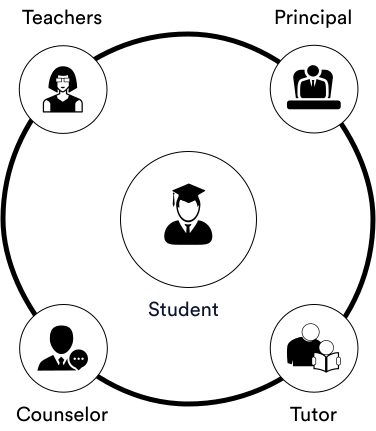
A suite of customizable, SIS-agnostic and AI-enhanced tools that remove barriers for Principals, Teachers and Students.
Turn Data Into Your Most Powerful Ally
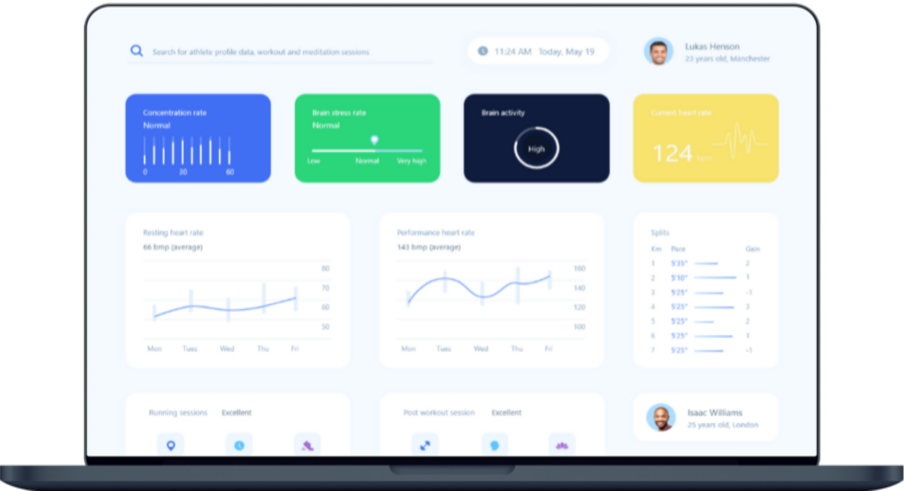
DataDesign’s intuitive data and AI platform makes setting KPIs and analyzing metrics easy, turning your questions into actionable insights that help you improve teacher and student outcomes and write the stories you want to tell.
Save Time With a One-Stop Dashboard
Organize and clarify your work with DataDesign’s dashboard that unifies learning plans, student tracking, and student-parent communication. With the help of our new AI feature, our tools make your life easier, giving you more time to do the work that matters to improve student outcomes.
Build Student Self-Efficacy with a Powerful App
Leverage the technology students use daily to empower them to take charge of their education. Our intuitive mobile app puts calendar, module, and student profile management at their fingertips, along with an AI feature that provides 24/7 support. This helps to develop a culture of transparency and self-efficacy across your school.





Federal Funding
Funding for Every Student Succeed
Act (ESSA)
The largest source of federal funding to schools is from Title I, providing over $16 billion dollars to schools that serve a high number or high percentage of children from low-income families to ensure that these children are able to meet challenging state academic standards.
How DataDesign aligns to Title I, Part A
- DataDesign’s Data Dashboard provides an actionable view of Multi-Tiered System of Supports (MTSS) to help educators provide academic and behavioral strategies for students with various needs.
- DataDesign helps to remove barriers for administrators, educators, and students by compiling data on achievement and progress toward state academic standards in one seamless place.
- DataDesign’s unique Student Tracking Module is a tool for teachers and counselors that allows a complete view of a student’s profile including their demographic and SIS information to be accessed all in one place. This tool enables the multiple educators who work with a student to track and access data, view a student’s individual learning path, as well as document and manage communications with a specific student.
- DataDesign’s Student Tracking Module and Mobile App enables and encourages parents and students to participate in consistent, two-way meaningful communication regarding student learning with school staff.
- DataDesign's AI feature analyzes student performance patterns, offering predictive insights to identify at-risk students, suggest interventions and optimize resources.
Title II is focused on preparing, training, and recruiting high quality teachers and principals. With a focus on increasing student academic achievement through strategies such as improving teacher quality, Title II funds professional development activities that are sustained, intensive, collaborative, job-embedded, data-driven, and classroom-focused.
How DataDesign aligns to Title II
- With DataDesign’s enhanced data visibility, professional development for educators can be personalized to their student population, highly targeted to their students’ needs.
- DataDesign’s professional development is based on user engagement, and employs a year-long program of support which includes one-on-one collaborative meetings with school leaders. DataDesign uses these touchpoints to craft a strategic approach for teachers and will provide as many training follow-ups as are requested.
- DataDesign’s professional development is ongoing and completely customizable to a school’s specific needs to accommodate their continually changing data requirements.
- DataDesign’s AI feature analyzes teaching trends, identifying skill gaps, and recommends targeted training, aligning initiatives with real-time needs.
Title III provides federal funding that is focused on ensuring that English learners, including immigrant children and youth, attain English proficiency and develop high levels of academic achievement in English and meet the same challenging state academic standards as their English speaking peers. It can be used to assist teachers and leaders in establishing, implementing, and sustaining effective language instruction programs and/or to promote family and community participation in language instruction programs for the parents, families, and communities of English learners.
How DataDesign aligns to Title III
- DataDesign excels at sorting subgroups. Data that is easily collected using DataDesign’s platform can help educators identify barriers and better support English learners.
- DataDesign’s platform can be used to assist teachers and leaders in establishing, implementing, and sustaining effective language instruction programs that are data-driven.
- DataDesign promotes family participation and engagement in educational programs, using native language support via the language translation feature on the Student Tracking Module and Mobile App.
- DataDesign’s AI feature uses predictive analytics to help educators identify trends, recommend interventions, and track progress for English learners.
Title IV is a block grant that provides over $1 billion in funding to school safety, well-rounded education, and educational technology initiatives. Under the CARES Act, these funds can now be used to fund any of these three priorities: providing students with a well-rounded education, maintaining student health and safety, and purchasing and implementing education technology and systems.
How DataDesign aligns to Title IV
- DataDesign aids in maintaining student health and safety by providing mental health and behavioral information in one place for increased visibility and actionability by school and district staff.
- DataDesign is an information hub providing communication, including via text and email, with and about students from multiple sources that are collected and shared with key educators in a student’s life. This unique feature helps to foster a stronger sense of connectedness between student and educator, thereby improving the school’s climate.
- DataDesign can track attempted student contacts that were unsuccessful to prompt additional follow up.
- DataDesign has the ability to create customizable notifications to highlight areas where students may be at-risk.
- DataDesign is considered an education technology, thus qualifying for Title IV funds and building on existing systems in use within a school or district. It is SIS-agnostic, allowing districts to better utilize and capitalize on their current education technology investments.
- DataDesign’s AI feature analyzes behavioral and performance patterns to identify at-risk students, offering data-driven intervention recommendations.
The McKinney-Vento Homeless Assistance Act authorizes the federal Education for Homeless Children and Youth (EHCY) Program and is the primary piece of federal legislation related to the education of children and youth experiencing homelessness.
How DataDesign aligns to Title IX
- DataDesign is a useful tool for staff members working with students experiencing homelessness. DataDesign’s platform can identify students with rapidly changing home situations and make sure status changes and subsequent services, including transportation and free and reduced lunch eligibility, are communicated to all necessary stakeholders while protecting student confidentiality.
- DataDesign's communication capabilities allow for changes to a student’s living situation to be added, flagged, and escalated in the system, if needed. This allows for consolidation of information from multiple sources.
- DataDesign’s AI feature analyzes data patterns to identify those at risk of instability. It provides predictive insights and recommends proactive measures, while ensuring privacy compliance.
The Individuals with Disabilities Education Act (IDEA) is the federal law ensuring students with disabilities receive a free and appropriate public education. IDEA governs how states and public agencies provide early intervention, special education and related services to eligible infants, toddlers, children, and youth with disabilities. Second only in size to Title I funds, school districts receive IDEA funds to help pay for the cost of providing services and education to children with disabilities.
How DataDesign aligns to IDEA Funding
- DataDesign is a useful tool for staff members working with students who have Individualized Educational Plans. DataDesign’s platform can identify students with an IEP and make sure accommodations are communicated to all stakeholders.
- DataDesign's communication capabilities allow for service logs and case notes to be added and flagged in the system, if needed.
- Students’ data and academic progress can easily be monitored and communicated to the student, parents, and compliance coordinator.
- DataDesign provides the tools for special education teachers and service providers to analyze students’ data neccesary to improve student achievement.
- DataDesign’s AI feature analyzes student performance data to predict challenges and recommend interventions, while ensuring IDEA compliance.
In response to the Novel Coronavirus (COVID-19), the U.S. Congress passed the CARES Act, CRRSA Act and ARP Act - relief packages designed in part to provide states with both funding and streamlined waivers to give state educational agencies (SEAs) necessary flexibilities to respond to the COVID-19 pandemic. The relief packages included almost $200 billion in emergency education funding, channeled for public schools mainly through the Elementary and Secondary School Emergency Relief Fund (ESSER Fund).
State awards for the ESSER Funds, rounds I, II and III, are in the same proportion that each state received under Title I, Part A of the Elementary and Secondary Education Act of 1965, as amended, in fiscal year (FY) 2019–20. Each state must use no less than 90 percent of its allocation to make subgrants to local education agencies (LEAs), based on each LEA’s share of funds received under Title I, Part A in fiscal year 2019–20.
How DataDesign aligns to ESSER Funding
- DataDesign’s offerings are authorized under the Elementary and Secondary Education Act and IDEA, as outlined above in funding descriptions for Title I, II, III, IV, IX, and IDEA.
- DataDesign allows for a quick analysis of longitudinal data and student achievement data to aid in the comparative analysis of learning loss due to COVID-19.
- DataDesign is equipped with a student tracker to track students learning remotely from home.
- DataDesign has the ability to connect and engage with students via the Student Mobile App, thereby substantially improving educational interactions.
- Learning loss and trauma can be better identified and addressed through improved data visibility and enhanced communication provided by DataDesign.
- DataDesign’s data dashboard enables users to drill down, flag students, and access strong aggregated data.
- DataDesign builds on existing systems in use within a school or district. The platform is SIS-agnostic, allowing districts to better utilize and capitalize on their current education technology investments.
- DataDesign’s AI feature identifies learning recovery trends, forecasting outcomes, and recommending evidence-based interventions.
Make an appointment with our Data Specialist today
Turn Your Data Into Action
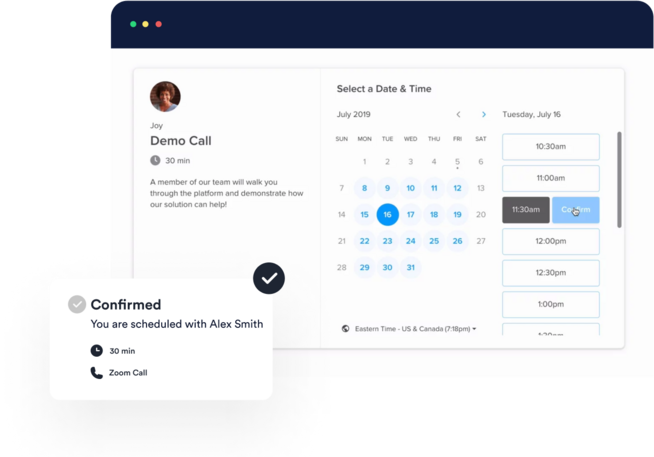
Schedule a call today to discover how DataDesign’s purpose-built tools and AI platform boost classroom outcomes and personalize student support.
Schedule a Demo